Chicago 400 Campaign
Multi-disciplinary campaign on behalf of Chicagoans with past convictions who are listed on public registries and experiencing homelessness and therefore must register weekly at Chicago Police Headquarters
2018-present
- Chicago 400 Campaign
-
Maps
-
McDonald's Programming
-
Organizing Model and Campaign Structure
-
Chicago 400 Conferences
-
Why This Issue
The Chicago 400
This unique multi-disciplinary campaign is organized with and on behalf of the Chicago 400, a class of people subject to the most extreme and damaging policies targeting those with past convictions. The Chicago 400 are Chicagoans experiencing homelessness who have a duty to register on a conviction registry.
—Nearly 80% are poor African-American men, age 30-60, from the west and south sides.
—Although many have 1-2 jobs, they often miss work or lose employment opportunities in order to register weekly.
—They are formerly convicted or incarcerated people and not on any supervision. Yet these laws require years and years of ongoing police contact—for most of them, it is for life.
—About 56% of the Chicago 400 have been sent to prison at least once for an administrative violation. These complex registry laws are an engine for re-incarceration.
—Nearly 1 in 5 people listed on the sex offense registry in Chicago is homeless, largely due to life-long housing banishment laws.
—The rates of people on registries are very high in general, and it is also racially disproportionate. About 1 in 227 men in Illinois is listed on the sex offense registry. For African-American men, that number is 1 in 100.
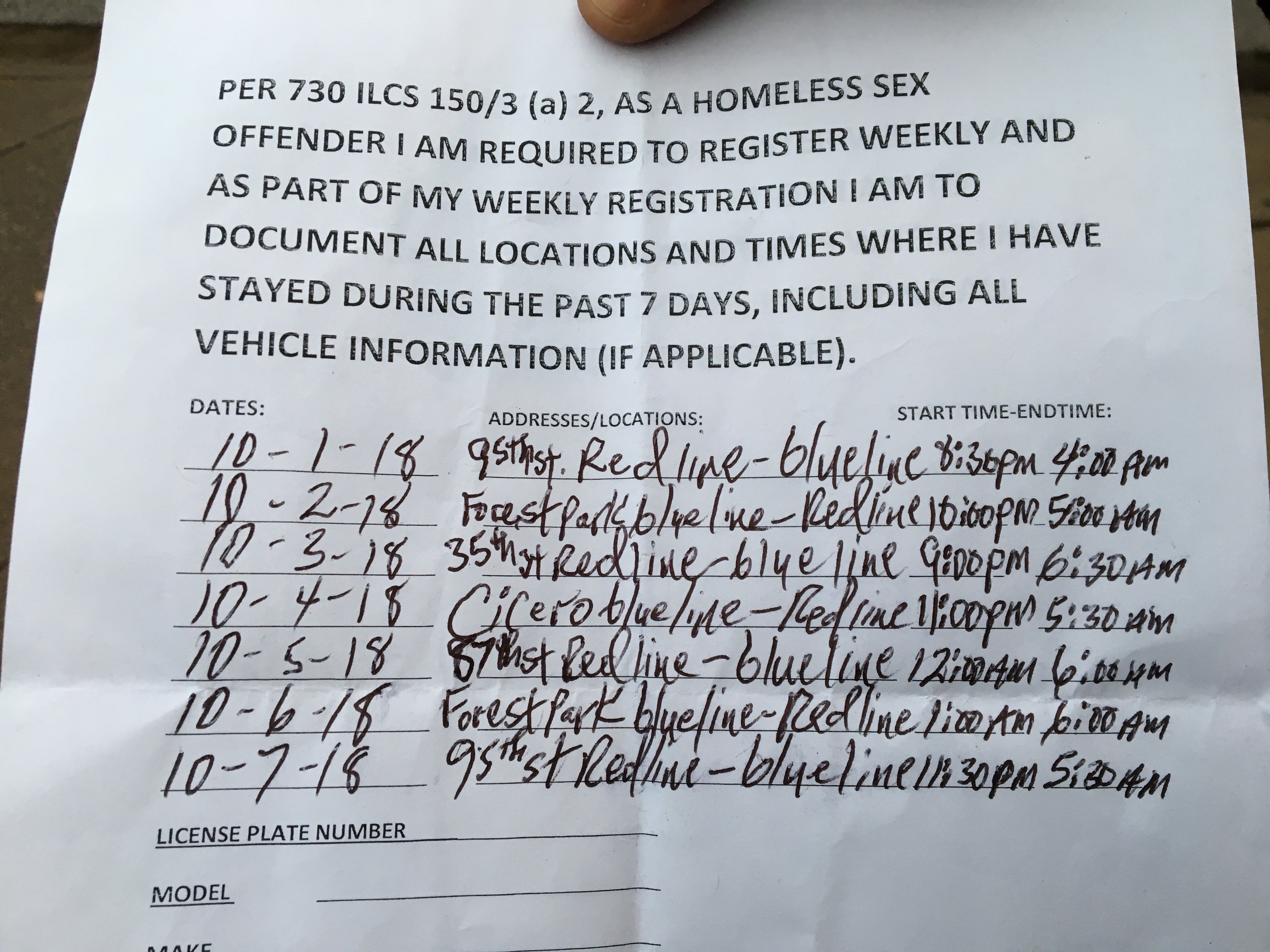
Anyone who lacks a fixed legal address must register weekly, which means spending the entire day in a bull pen at the police station. They are also subject to lifelong public banishment laws, which ban them from being present in prohibited areas for life, and housing banishment laws, which restrict most housing, forcing people into homeless in the first place.
Together they are organizing to support each other at the police station and to change the state laws, which are the most restrictive in the country. In January, we will introduce legislation—in collaboration with victim advocates and housing advocates—to end weekly registration and possibly to reduce housing banishment zones. The bill will also have a victim advocacy component.
The Chicago 400 Campaign is also working on cultural projects to advance narrative change, including a media campaign, a mapping project, a game simulation, and an audio project. These are funded in part by the Art For Justice Fund, Illinois Humanities, and the Open Society Foundations Soros Artist Fellowship. The Chicago 400 campaign has art shows in New York and Boston in spring of 2020.
Registration process
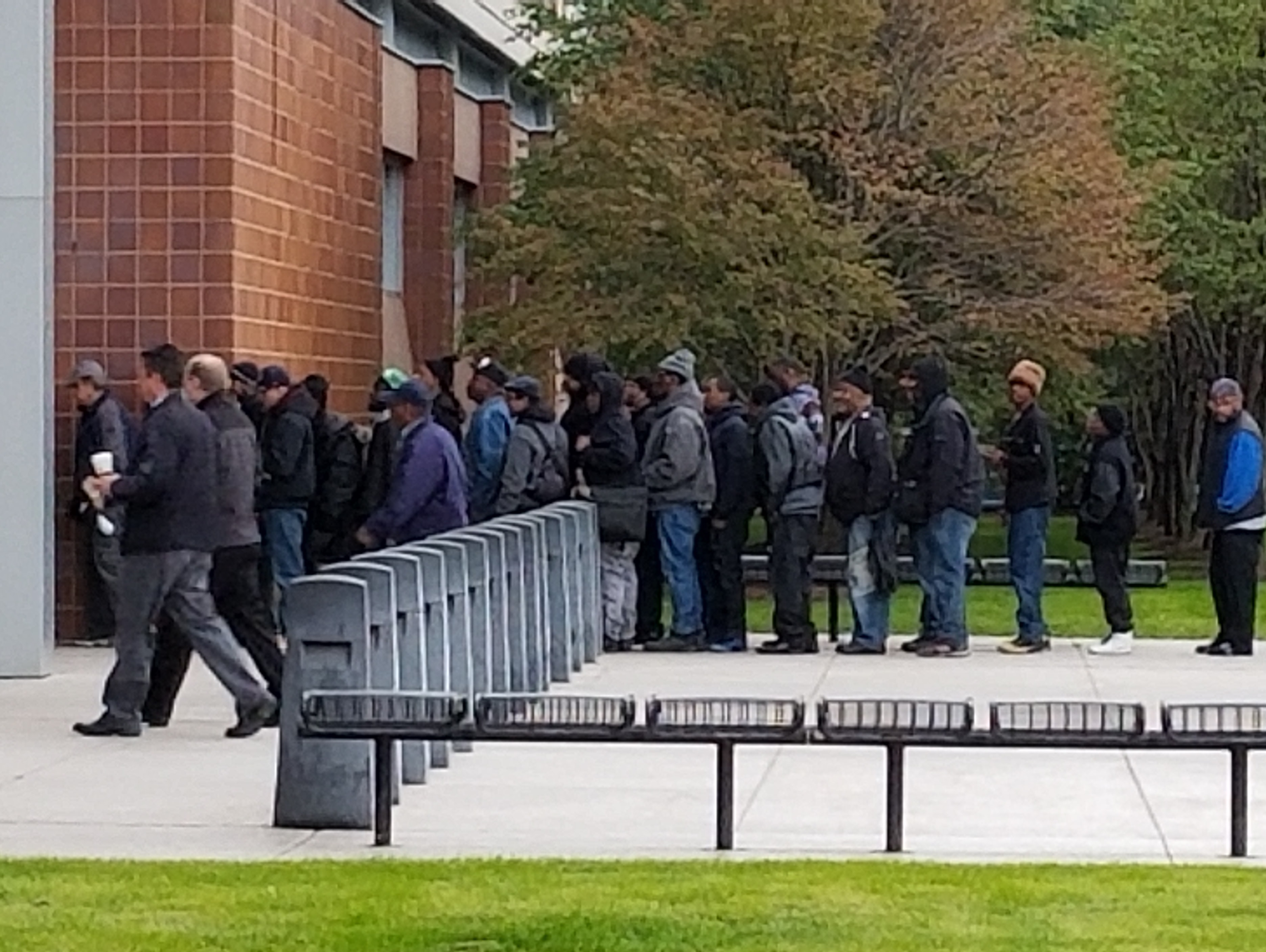
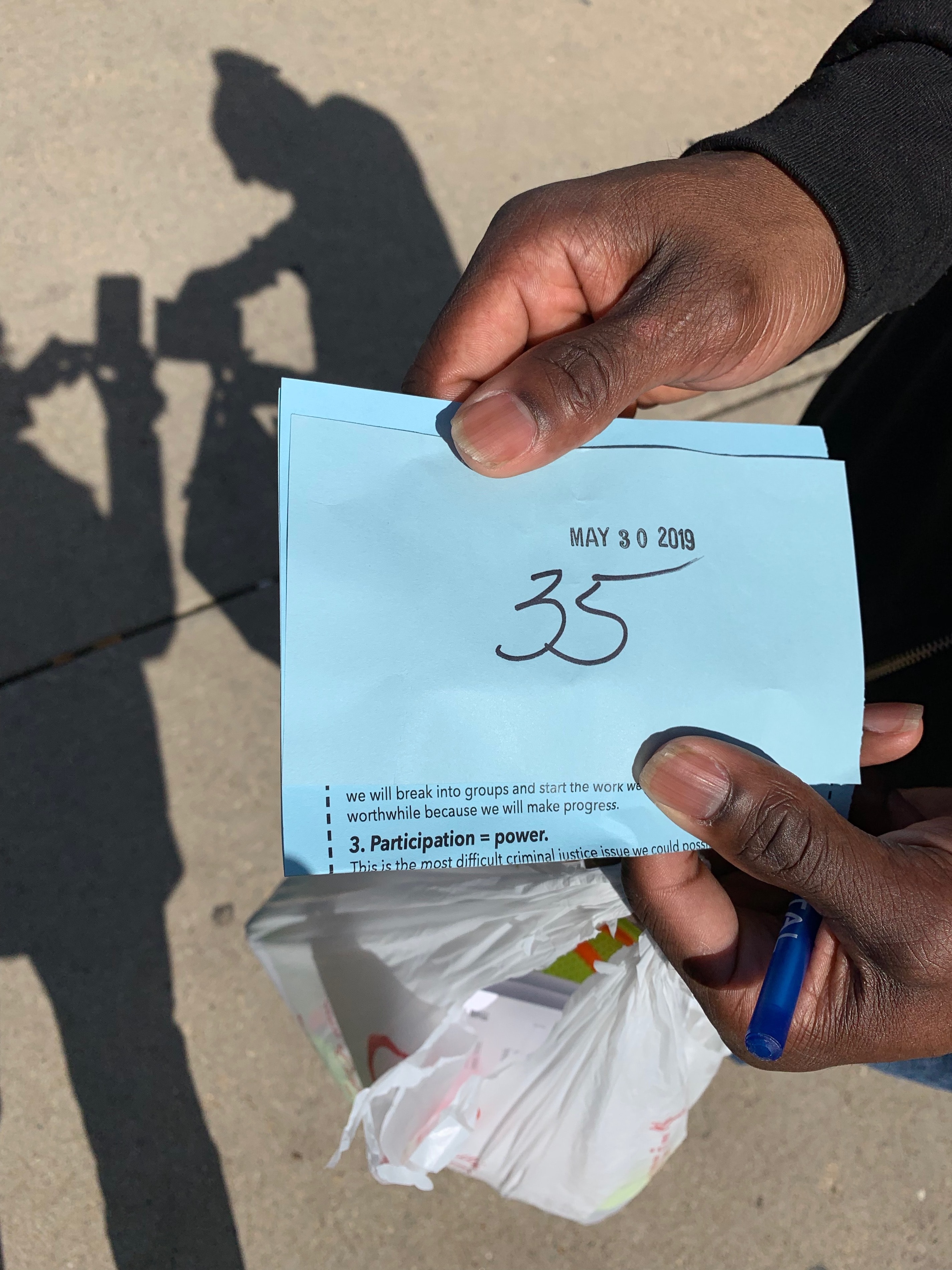
Everyone in Chicago listed on any public conviction registry has to re-register at Chicago Police Headquarters. When the registration unit opens at 8:00am, the police line people up and hand out numbers. Many people arrive at 3:00am or 4:00am, or even spend the night outside, to try to get a low enough number so they can make it to their jobs after they register.
Blue cards
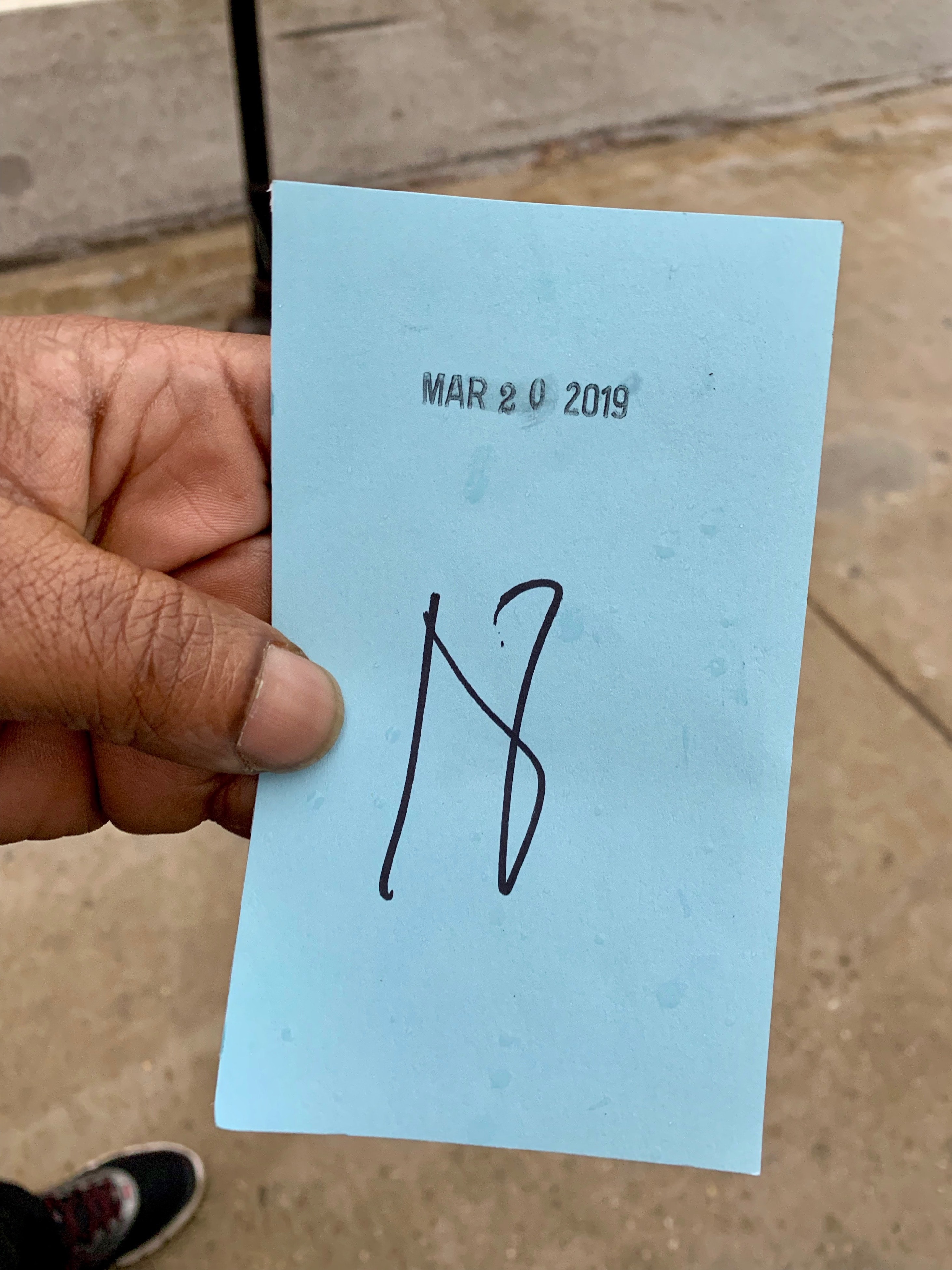
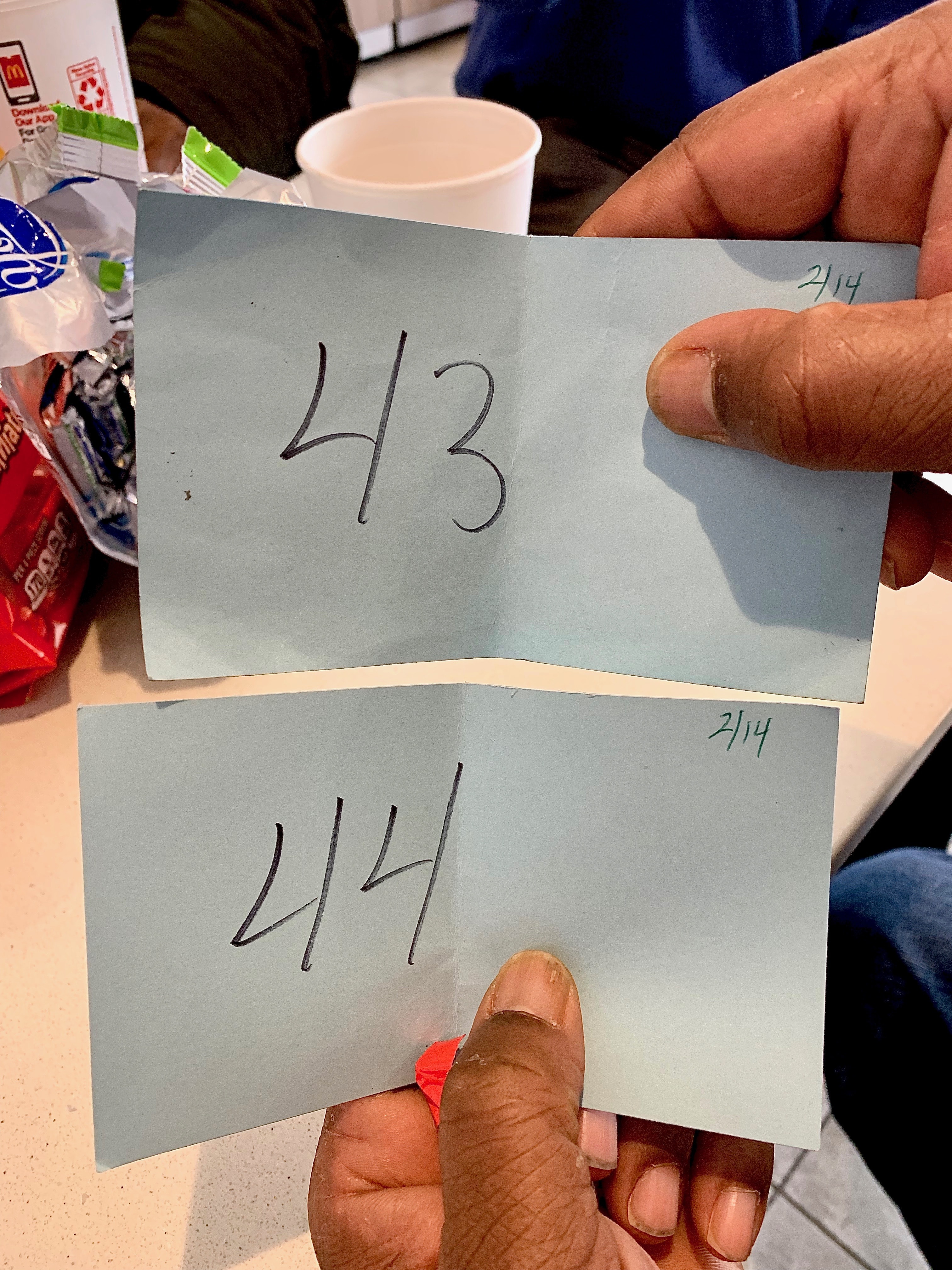
People experiencing homelessness are lined up separately and get a different set of numbers. The “blue numbers” are called last, after every other person has registered. Sometimes a person with the #1 blue card will still be waiting at noon, when the police take a lunch break. These blue numbers—only given to the Chicago 400—have come to symbolize their status as non-citizens and their need for group solidarity and direct-action organizing. In fact, the men in Chicago 400 are currently choosing a logo for their campaign. See the logo drafts below, designed by Platform.