A Performance About Public Crime Registries in 21 Parts
April 27, 2017
A True Person of No Status. Photo: Soohyun Kim
Description
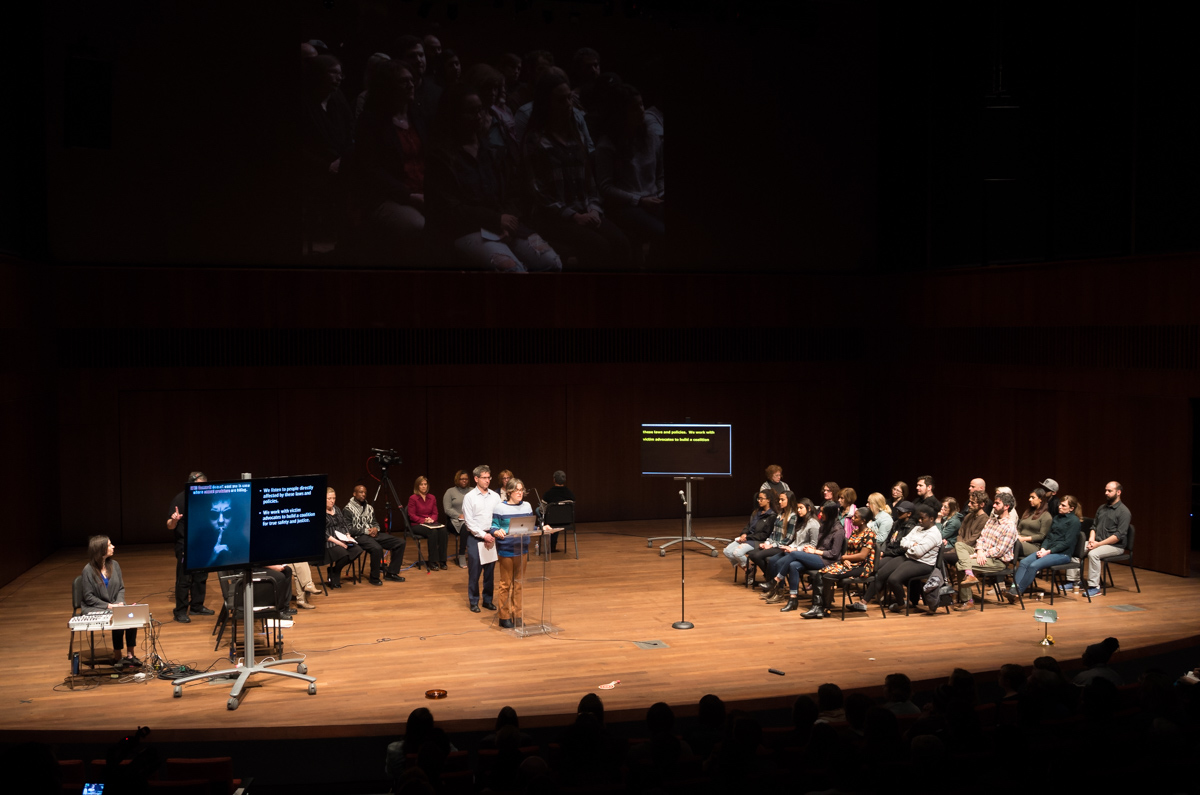
This episodic live performance examines our default policy responses to sexual abuse and violence—such as public registration and notification and housing banishment laws. Because of the tremendous stigma, directly-affected people, who know the most about the laws and restrictions, are least able to speak about them. The public rarely hears from families forced into homelessness, housing insecurity, unemployment, poverty, isolation, and public ostracism. This work, inspired by Brechtian epic theater and Boal’s Theater of the Oppressed, processes the ridiculous and tragic impact of these policies through lecture, testimony, stand-up comedy, film reenactment, and participation from a live on-stage audience. Art allows for bewilderment and uncertainty, often unavailable in policy discussions, and also a space to question the classifications on which these policies depend.
Commissioned by What is An Artistic Practice of Human Rights? a summit co-sponsored by the Richard and Mary L. Gray Center for Arts and Inquiry, the Pozen Family Center for Human Rights, and the Reva and David Logan Center for the Arts, University of Chicago. Link to summit website.
Credits
Organized, written, and directed by Laurie Jo Reynolds. Additional direction by Scott McFarland. Additional stage direction by Will Mingus. Live music by Adele Nicholas.
Execerpt of six sections of True Person of No Status: A Performance About Public Crime Registries in 21 Parts.
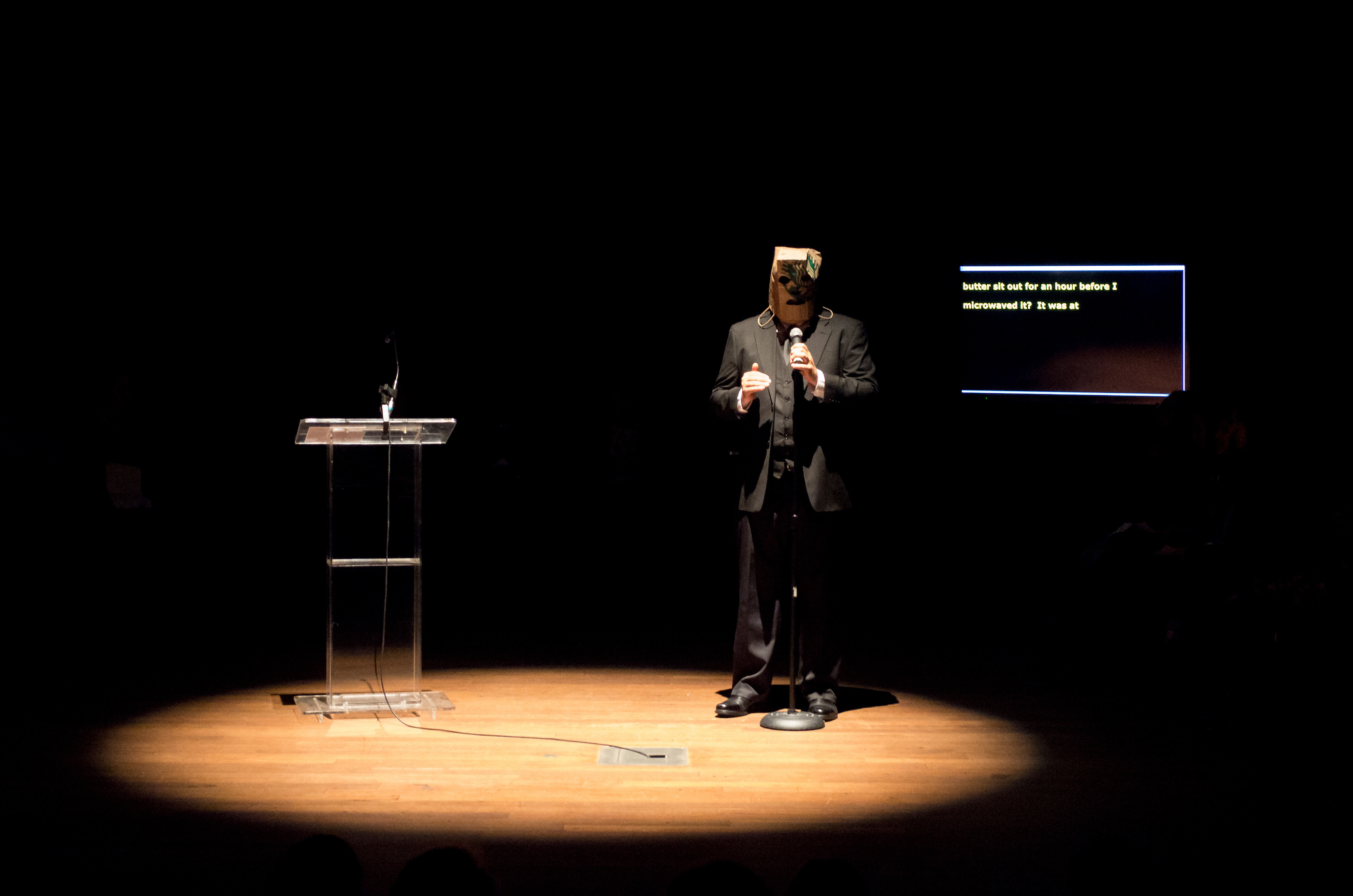
PHOTO STILLS
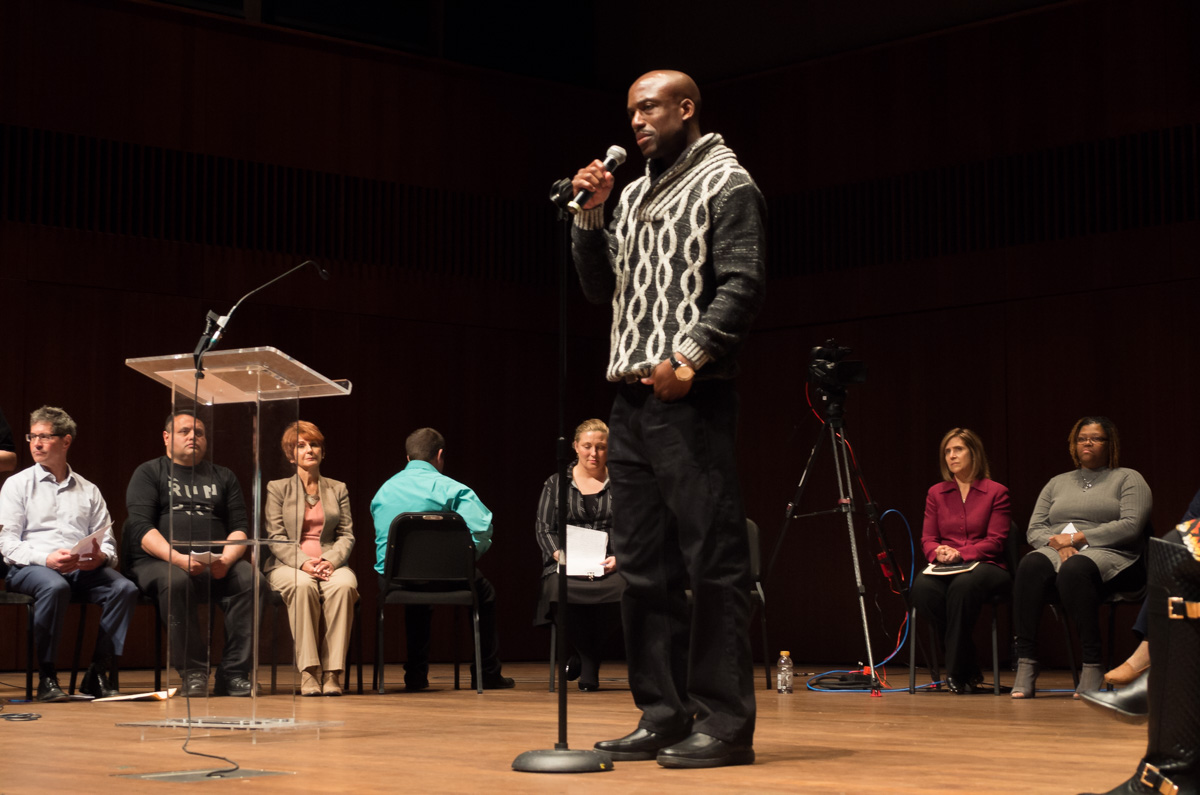
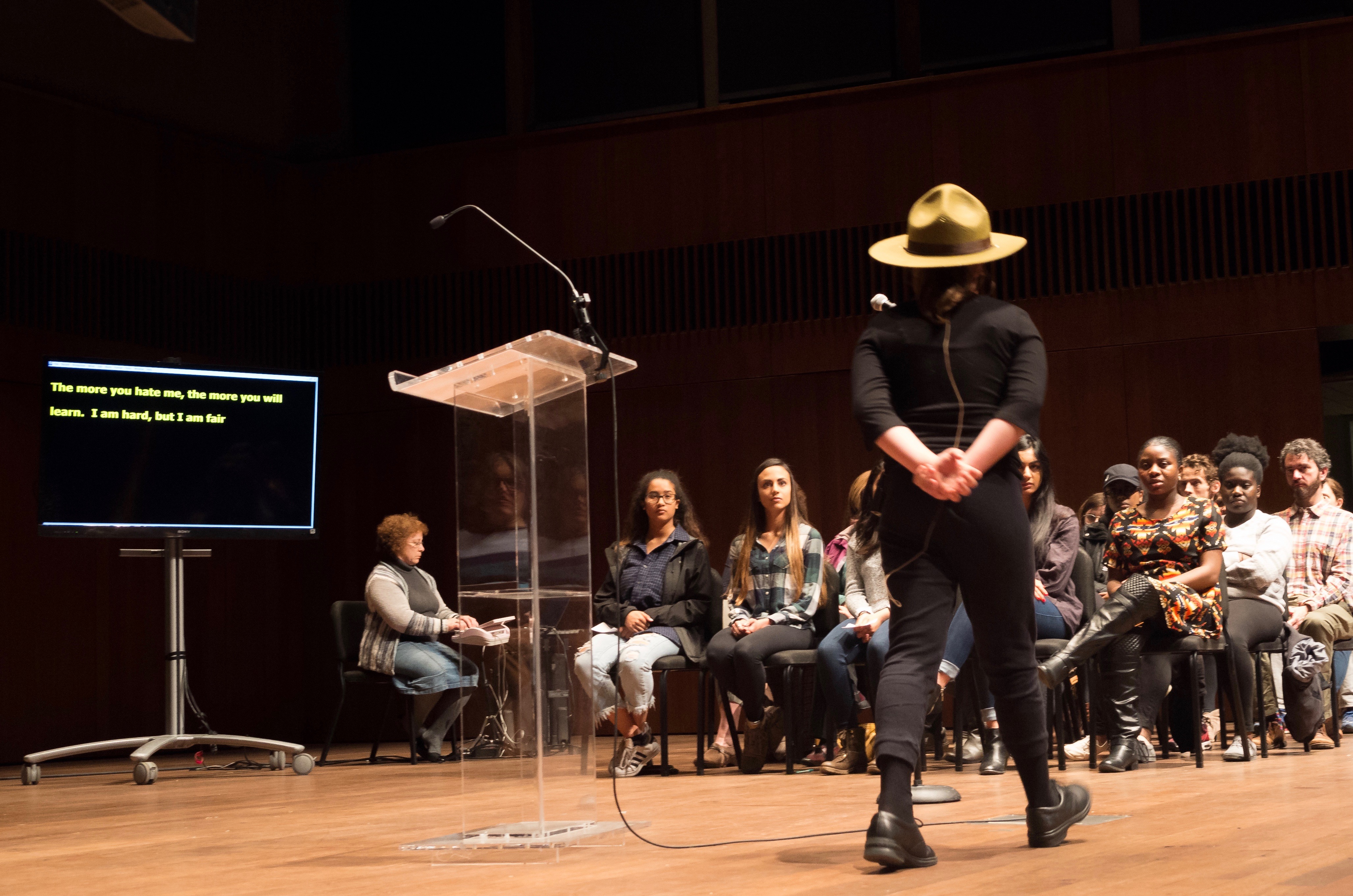
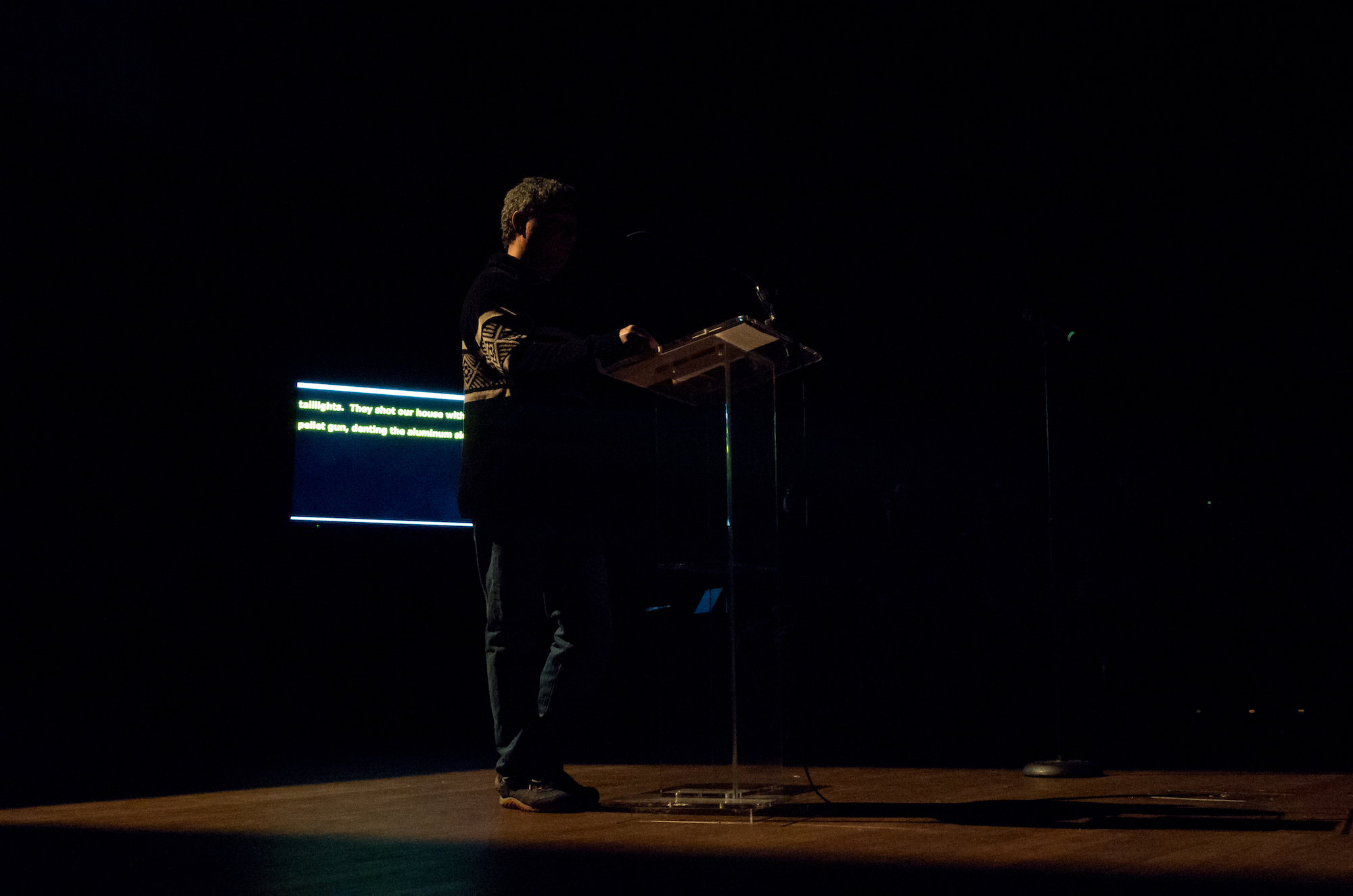
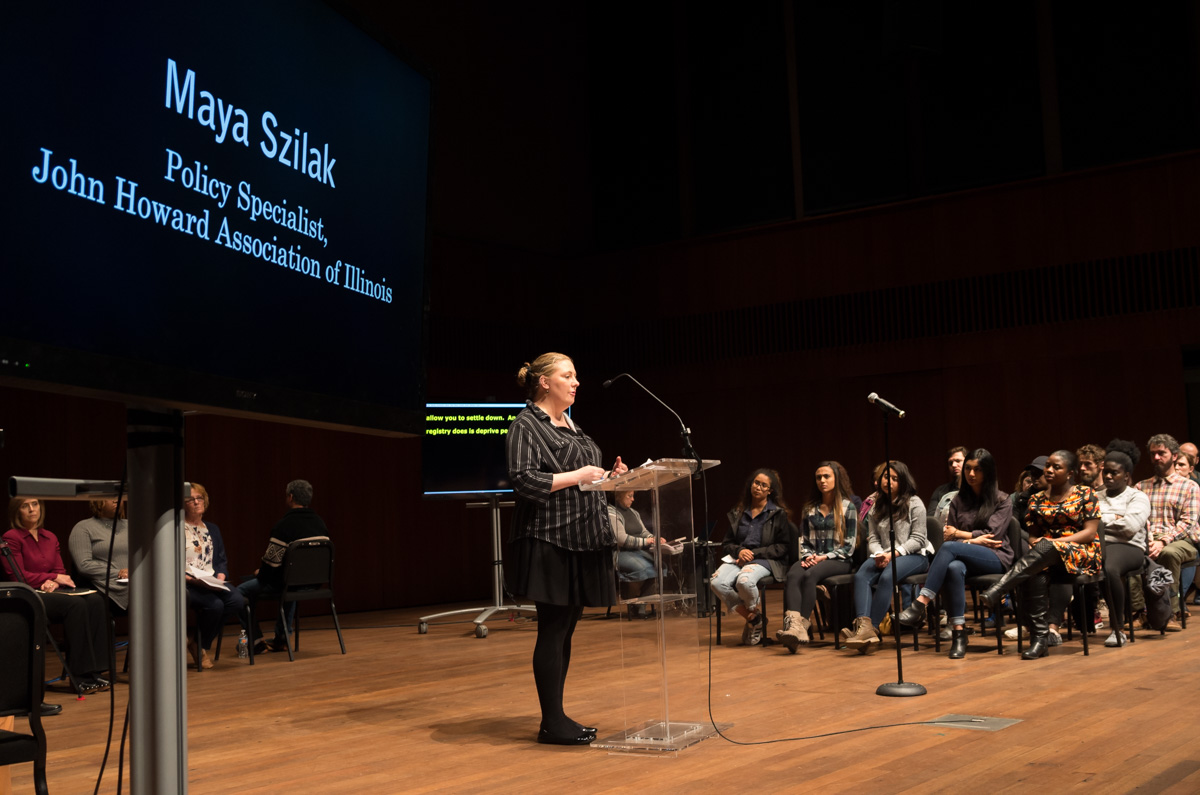
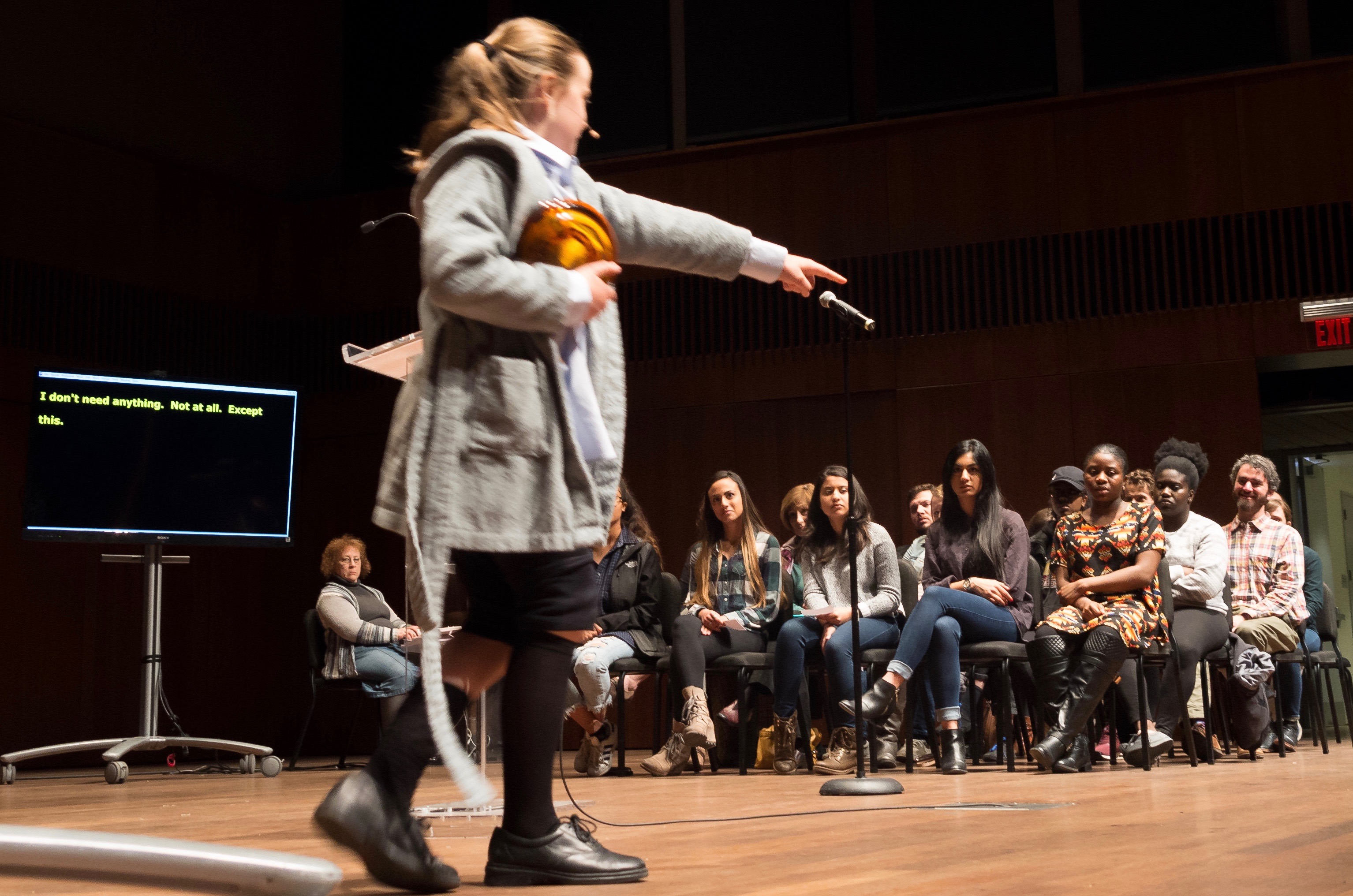
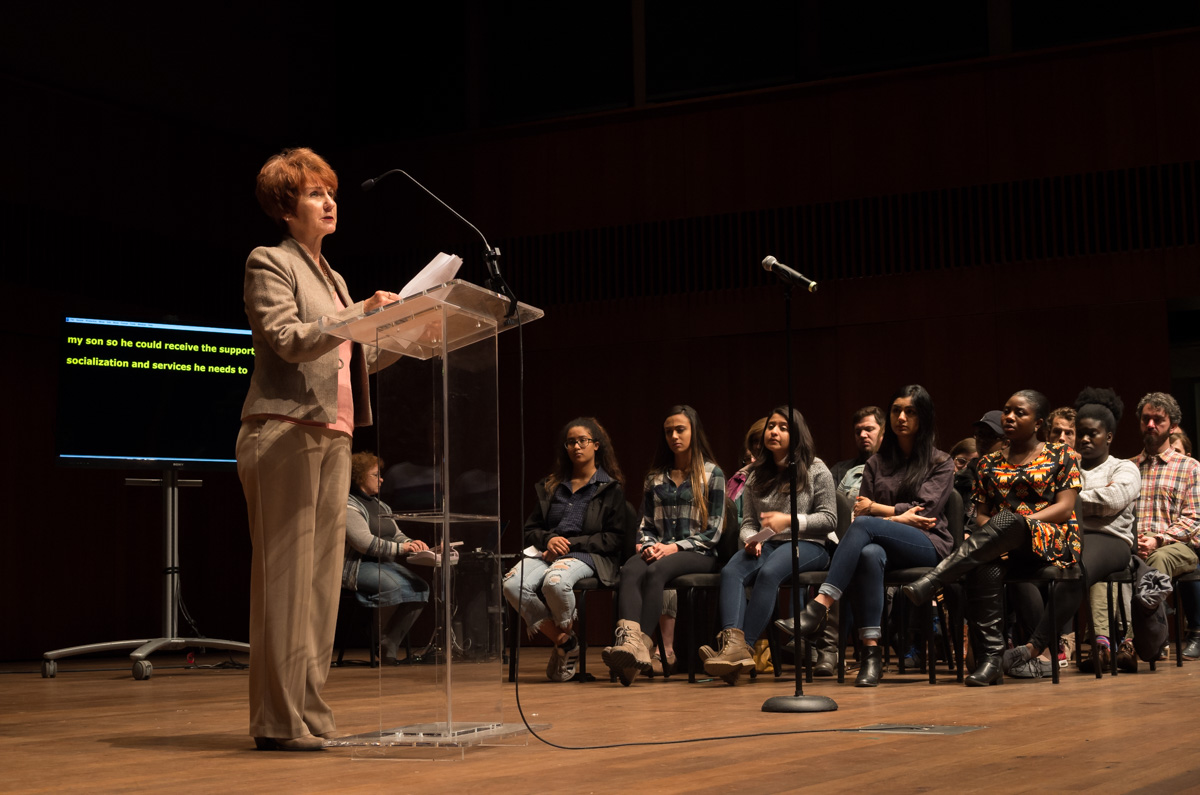
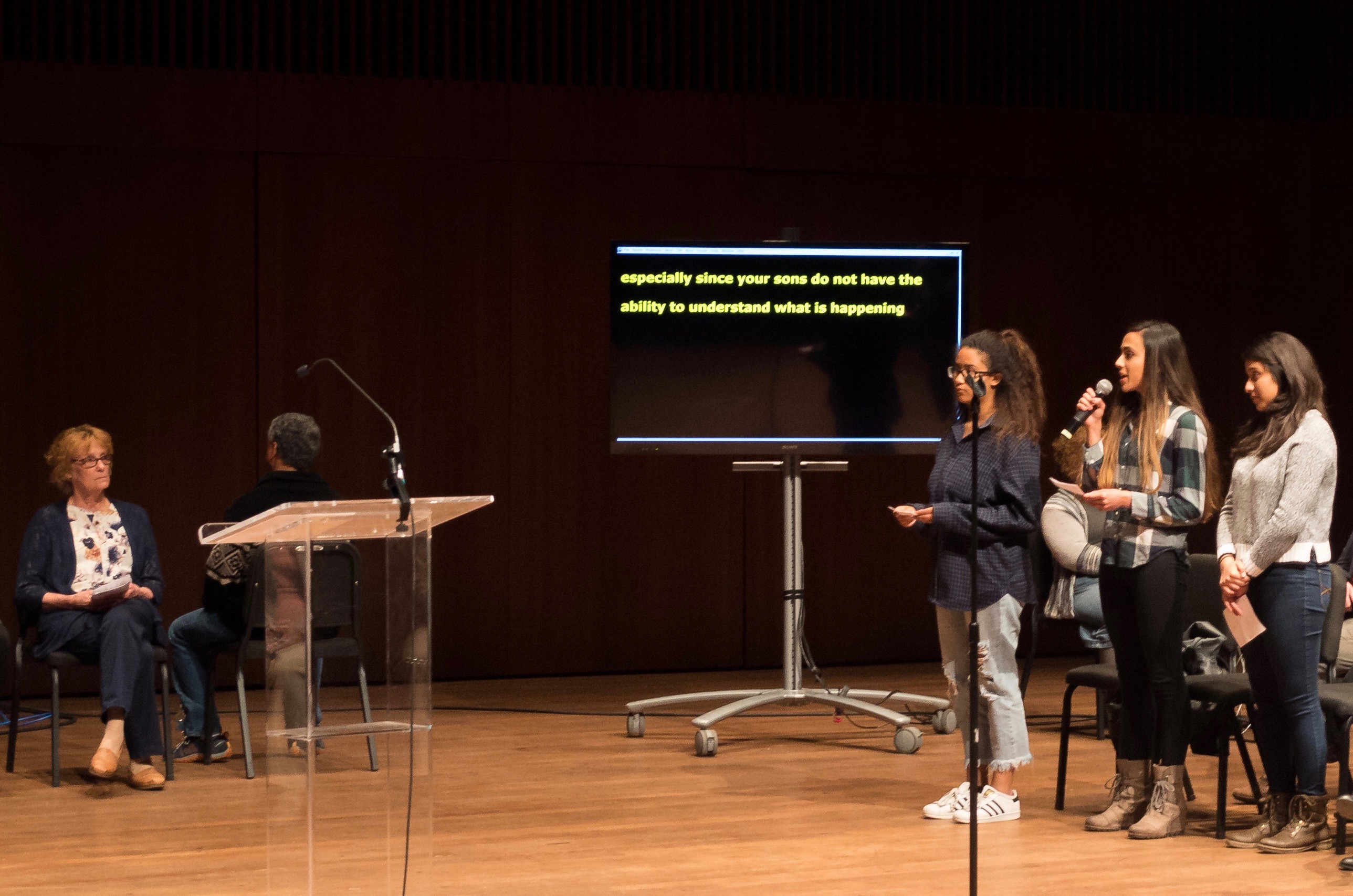
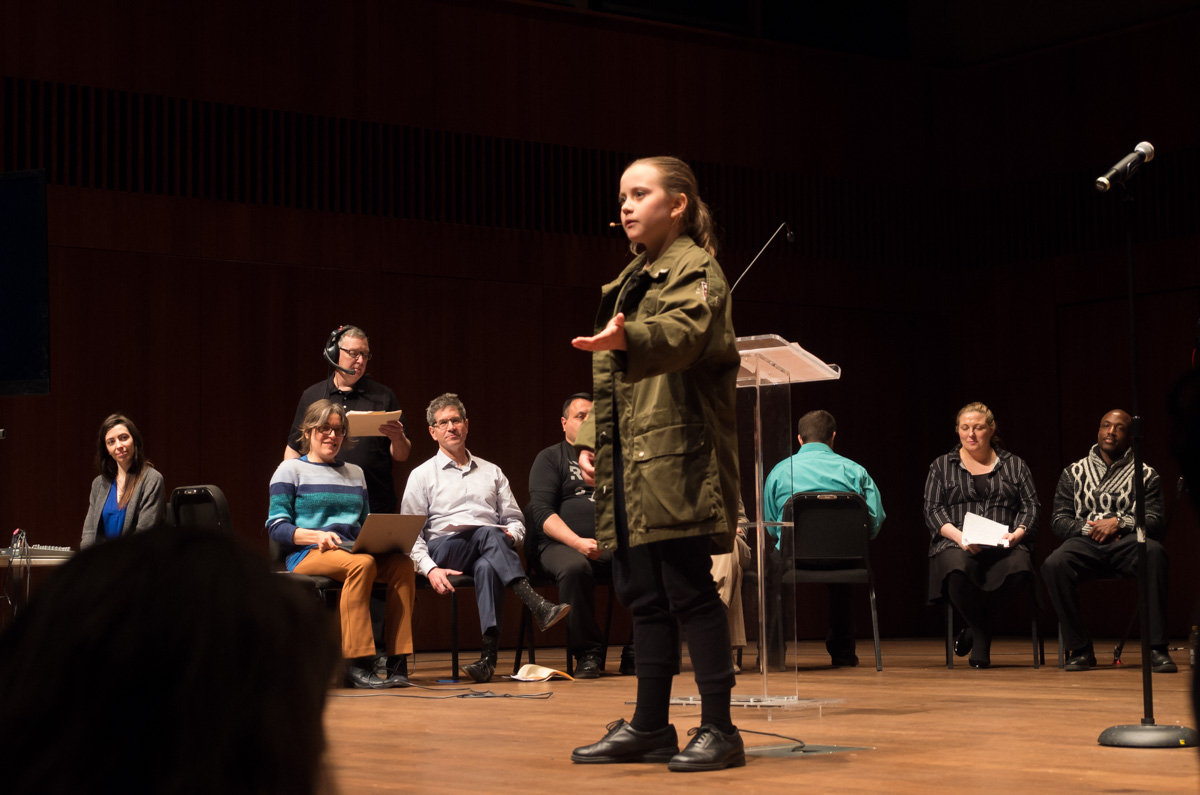
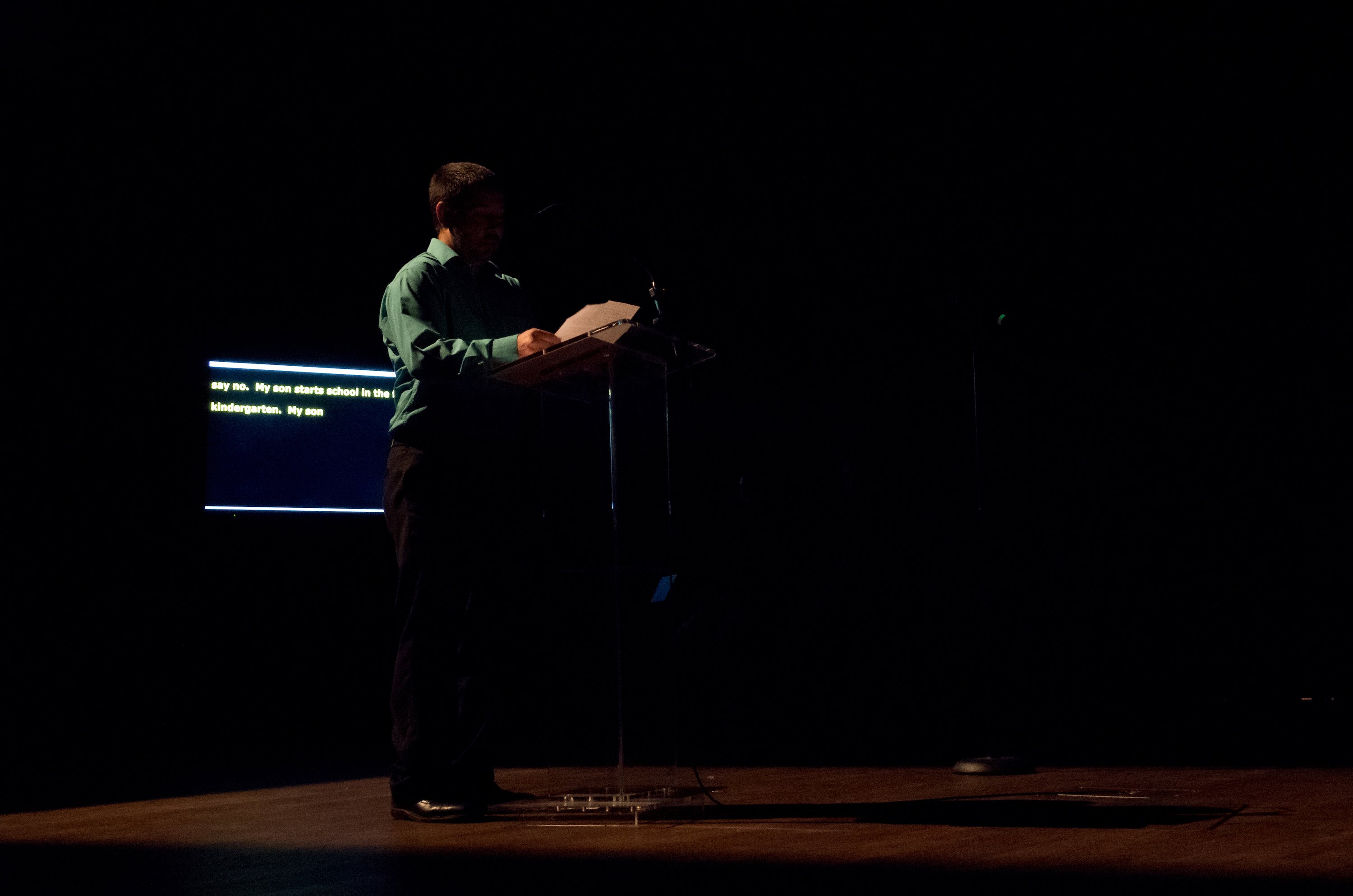
9. “I don’t understand you”—Anonymous discusses the use of measuring tape by cops. Photo: Soohyun Kim10. “Fighting to restore dignity”—When DeMel got out of prison, he did not know he was listed on the murder registry or had to register. His best friend Walter did not know either and had to go back to prison for two years for a "failure to register" felony, leaving his young daughter and pregnant wife. Photo: Sooyhun Kim8. “Do you maggots understand?” from Full Metal Jacket, 1987, performed by Lucy Lodder Lindstrom.14. “We can’t, we don’t have time”—Angel is a single father. His daughter does not understand why her dad won't stop to play in parks and playgrounds, but public exclusion laws make it illegal for him to do so. Photo: Sooyhun Kim15. Response—Maya Szilak recalls themes from the testimony she heard. Photo: Soohyun Kim16. “I don’t need you! I don’t need anything!” from The Jerk, 1979, performed by Lucy Lodder Lindstrom. Photo: Sooyhun Kim5. “Our family is the best support our son could ever have”—Carol catalogs the loss of job, housing, programs, and social services experienced by her adult son with an intellectual and developmental disability after he was placed on the public registry. Photo: Soohyun Kim20. Student reactions—on-stage audience members speak directly to performers.1. “You talking to me?” from Taxi Driver, 1976, performed by Lucy Lodder Lindstrom. Photo: Soohyun Kim6. “I am a great father”—Adrian is a single father. His son doesn't understand why his dad can't play catch with him in the park or attend his games, but public exclusion zones make it illegal for parents to go to schools or parks. Photo: Soohyun Kim