Calling Cards Series
Cards to help people negotiate their stigma
2008–present
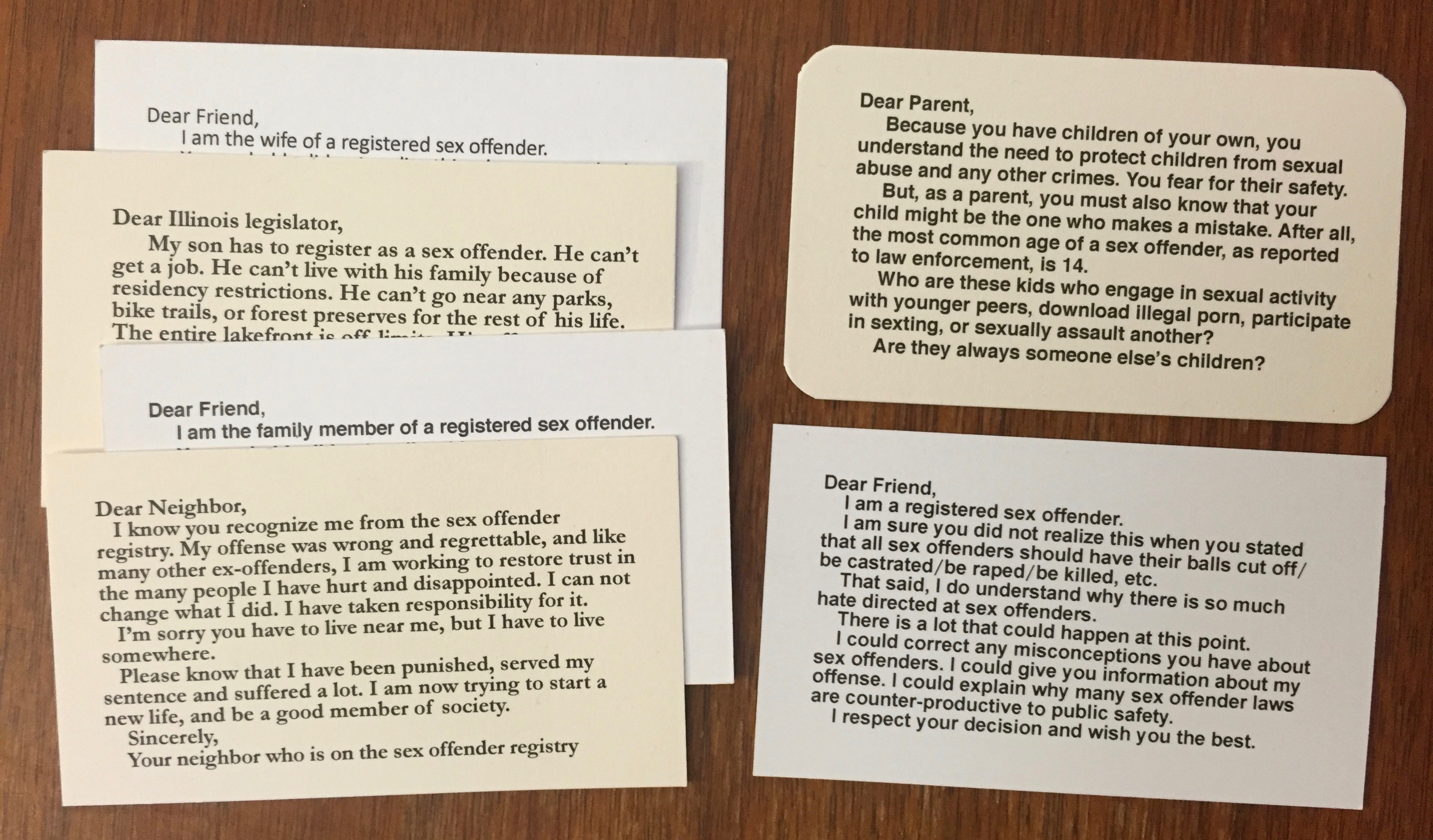
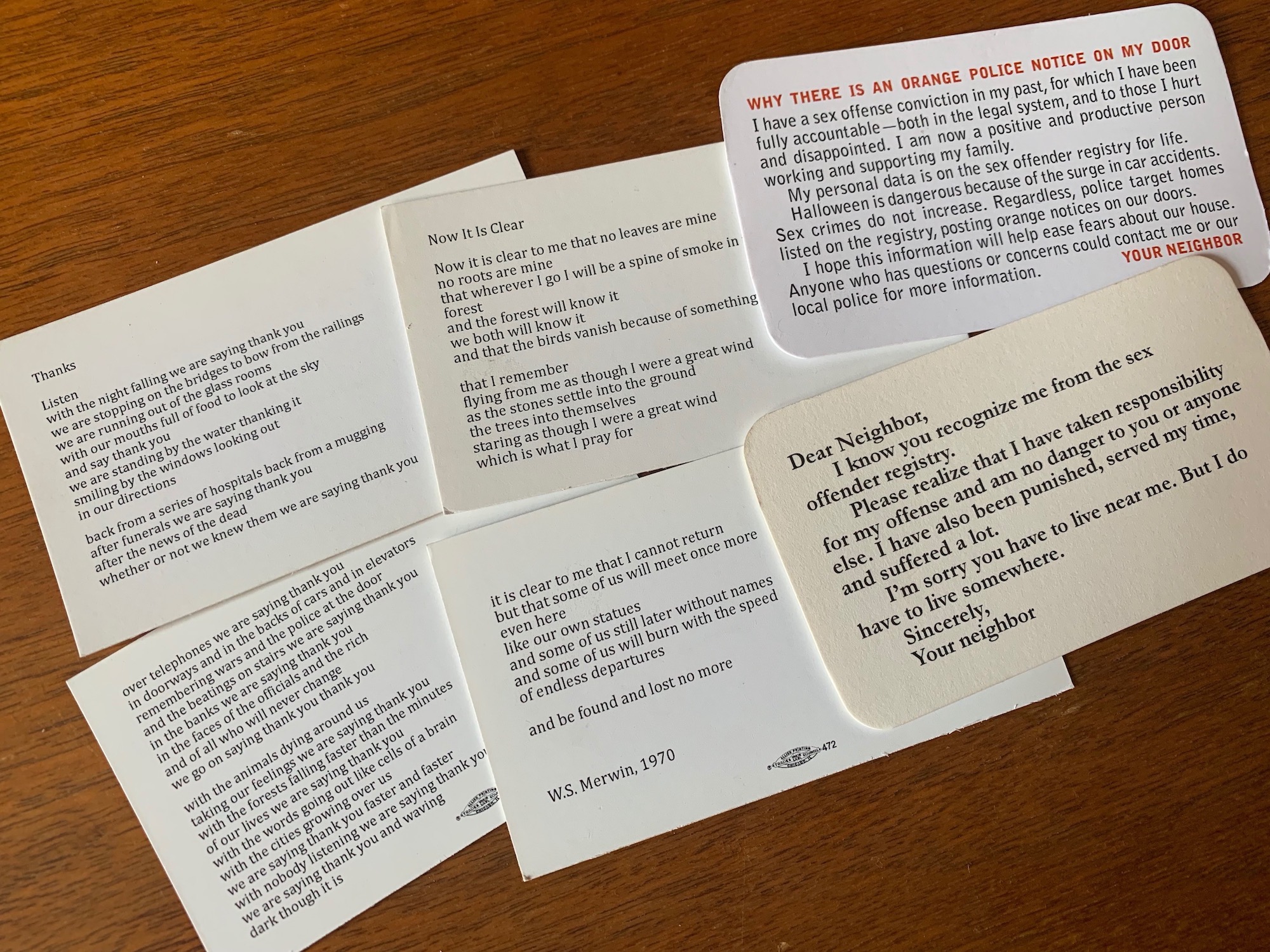
"Sex Offender" Calling Cards
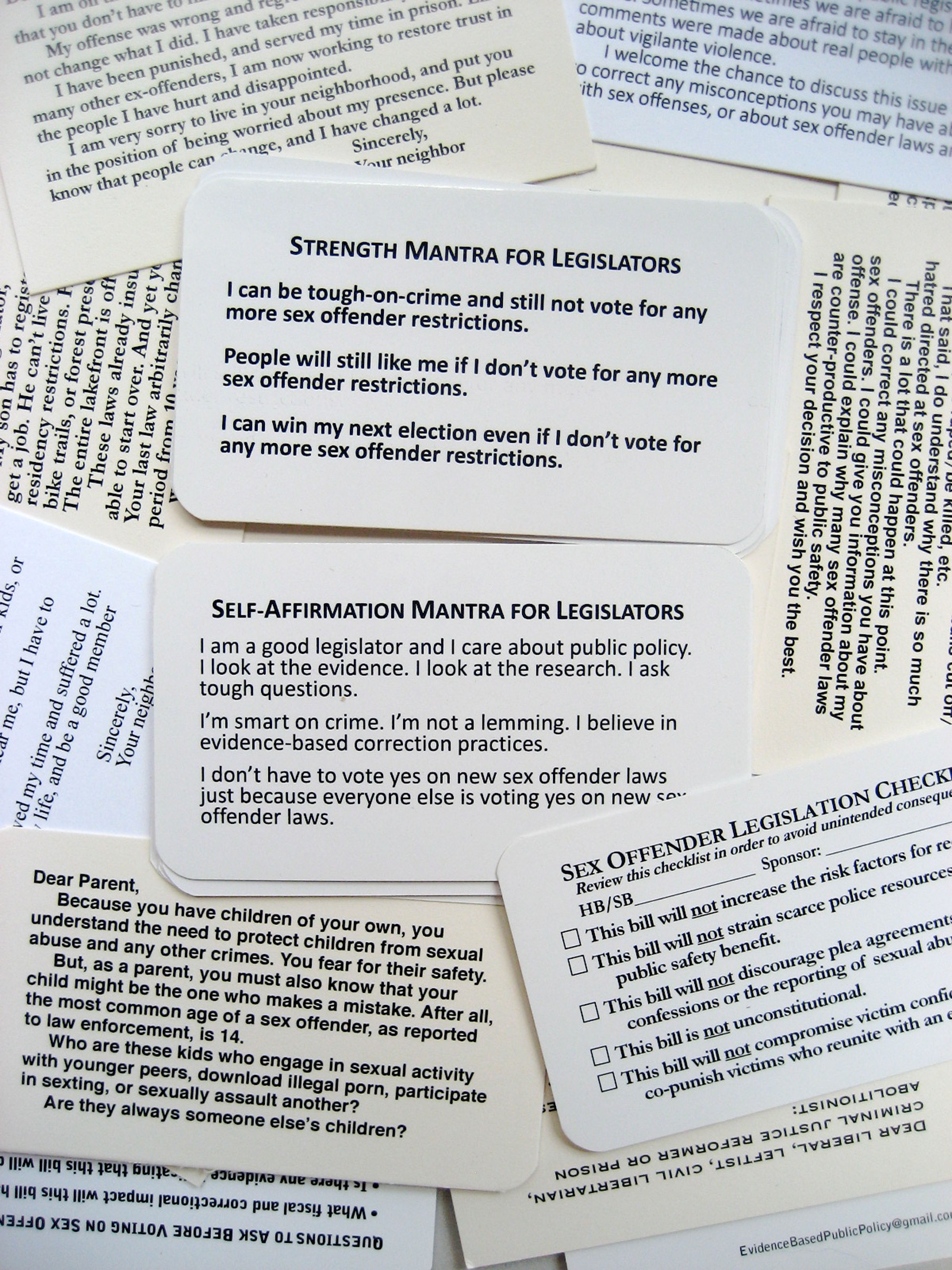
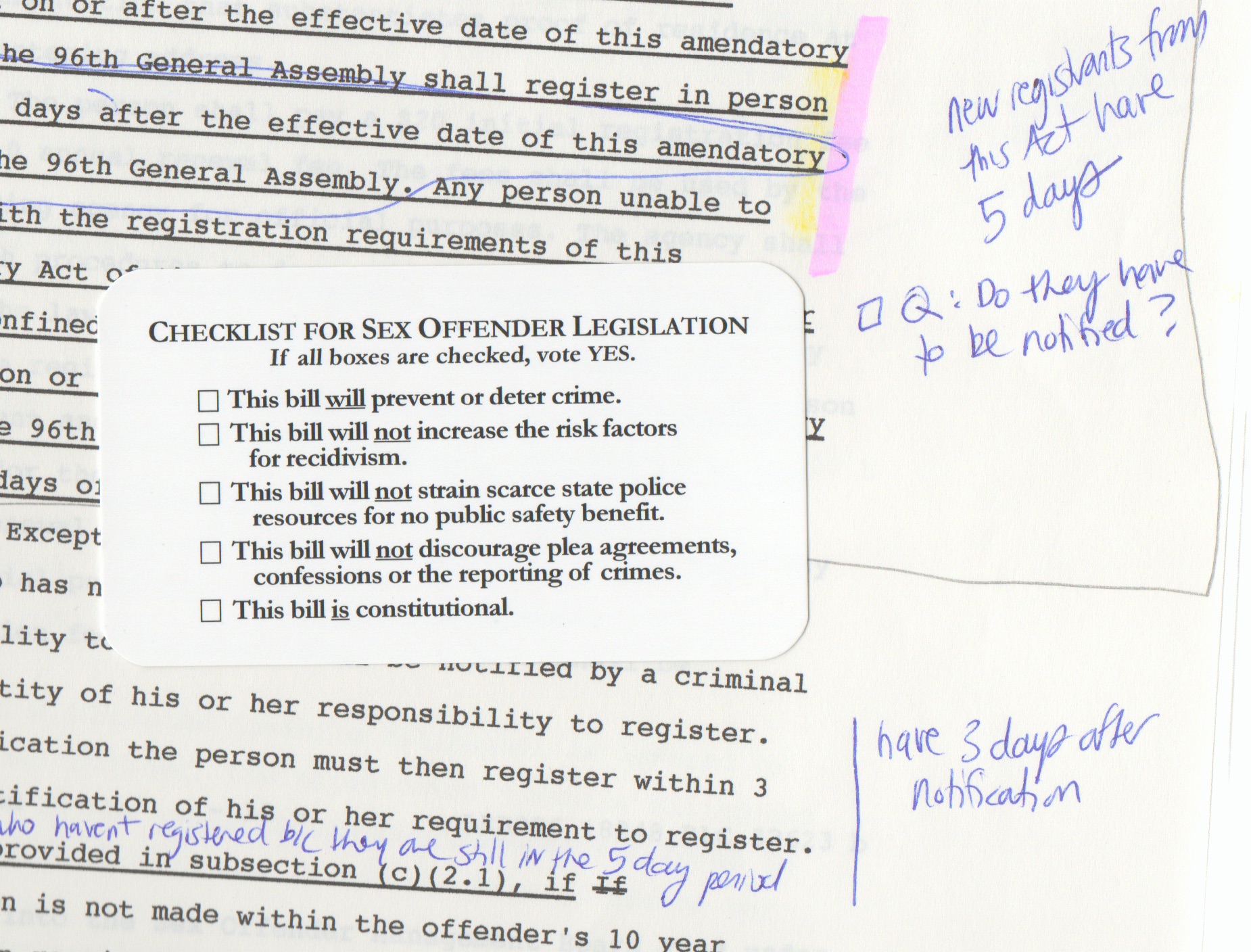
This ongoing collection of 2.5” x 3” union-printed business cards have been written, printed, and distributed in many venues over the years for a range of uses. In exhibitions, they serve as provocative art; in the state house, they propose and reinforce a critical understanding of why so many registration and banishment bills are introduced each session; at conferences, they serve as a conversation piece and a bonding experience for participants; on the homefront, they give people a tool for facing and preparing for difficult conversations in their neighhorhoods or workplaces. People listed on the public registries and their family members have unconcealed stigma—they don't know who knows about their shameful label, and they always have to make a calculated decision about if and when they can tell someone about a past conviction, even their own children.
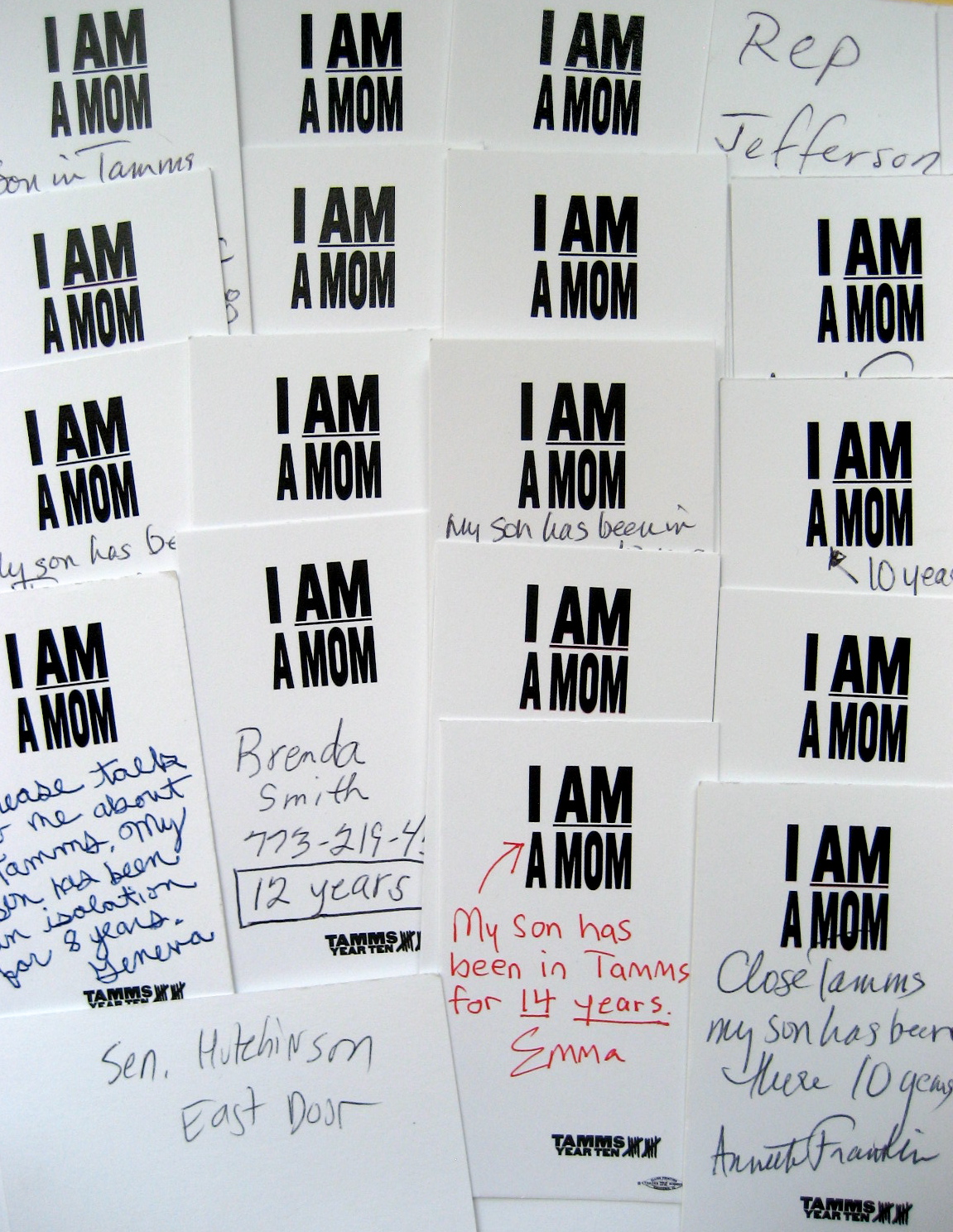
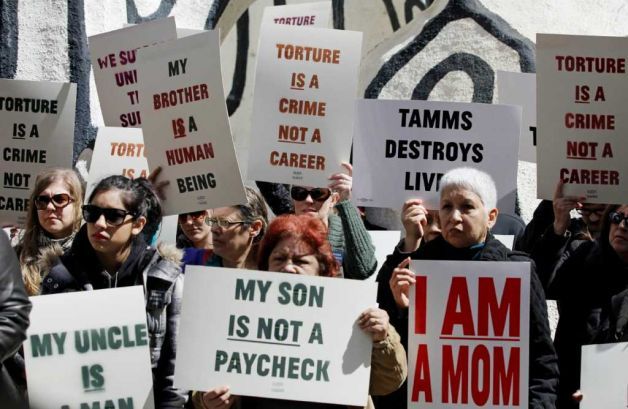
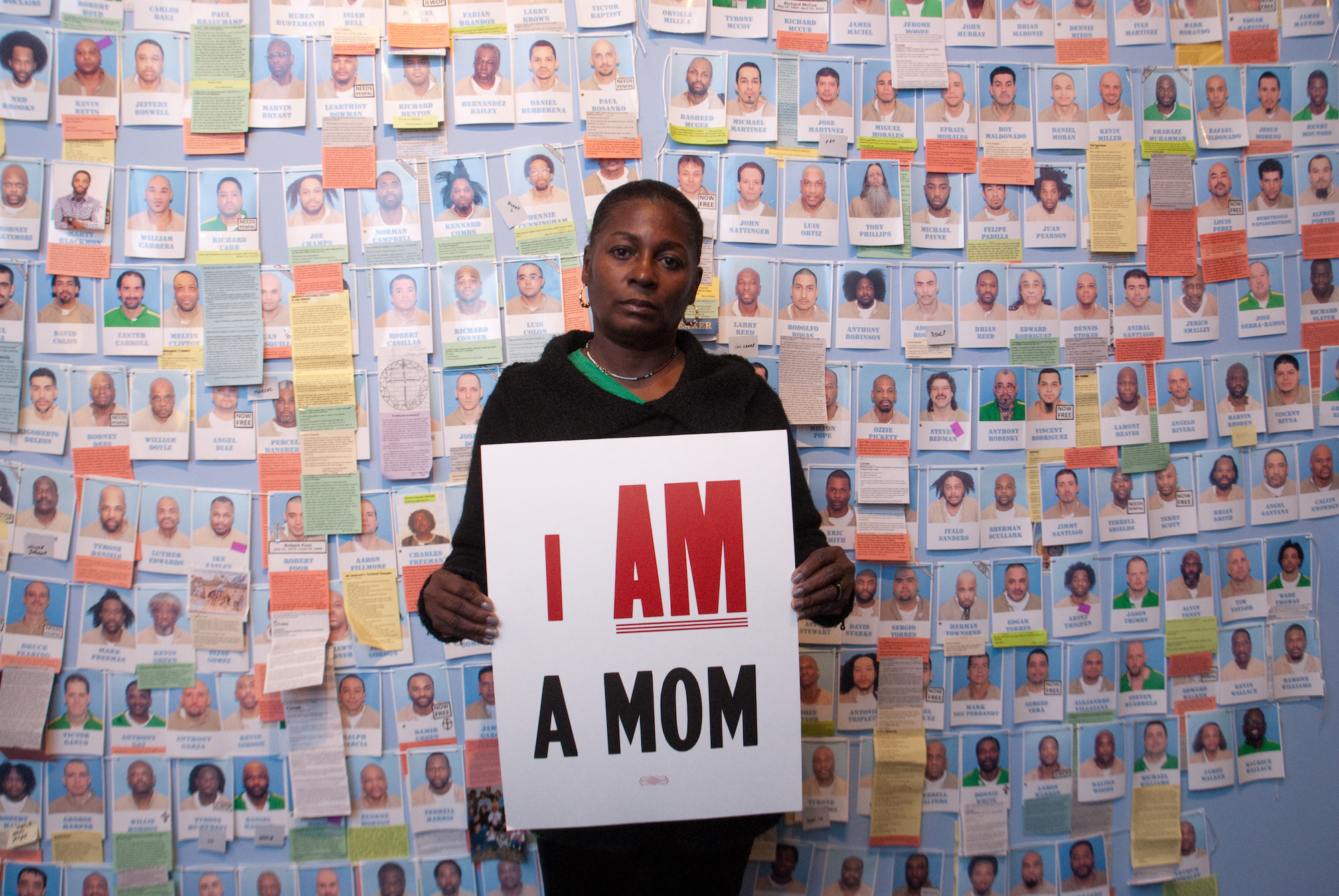
I AM A MOM Calling Cards
When lobbying at the statehouse, constituents rarely make appointments with representatives. Instead, we call elected officials off the House or Senate floor while the General Assembly is in session. This is done by passing a business card to a doorman who delivers it to the representative who, if inclined, comes out to the lobby. In our efforts to close Tamms supermax, different mothers came to the capitol each week to educate legislators about solitary confinement. They used "I AM A MOM" cards to summon them, specifying how many years their sons had been in isolation with no human contact. Week after week, the numbers weighed on the representatives. The "I AM A MOM" concept came from the iconic 1968 "I AM A MAN" signs, and was our theme for the closure campaign.
We Are Here Calling Cards
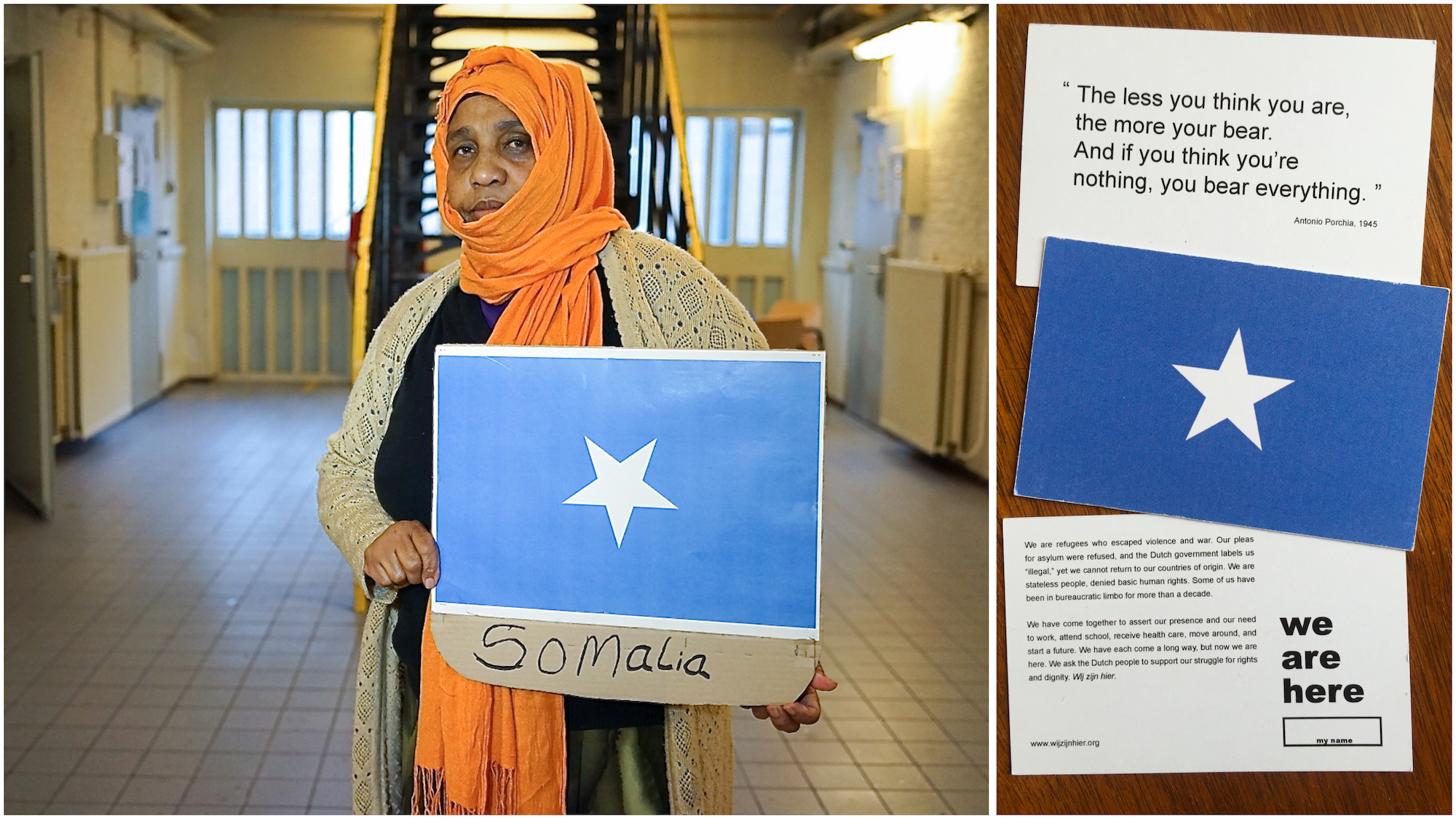
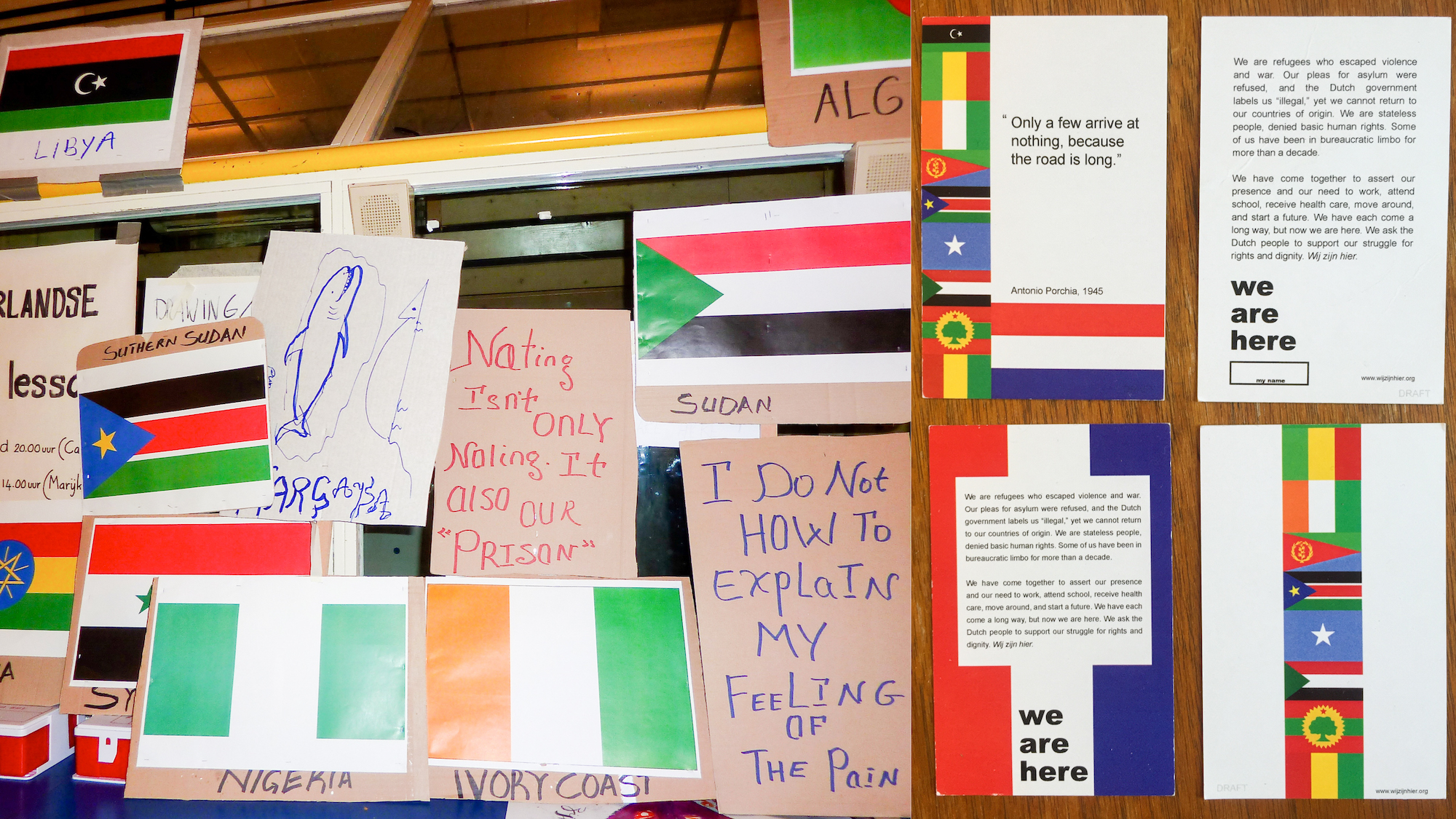
While in the Netherlands, I met Thomas Philip Guya who introduced me to a group of fellow refugees, mostly from Africa, who were living in one of the recently closed prisons. With their refugee status, they could not work, obtain housing or health care, or even leave the country. They organized into a very effective group based on the simple, inarguable premise WE ARE HERE. Their goal was to assert their presence and demand recognition from the Dutch government. I was taken by their existential crisis of having no country, and therefore no representative government. To the Dutch government, they are deemed “illegal” or “out of process.” They didn’t even have the “legitimate” status of “refugees” or “asylum-seekers.” Working with Thomas, I invited a U.S. human rights photographer, Giles Clarke, to come do a story to help increase their visibility internationally. Thomas had the idea of having this flag workshop, to create more signage for their public events. Everyone loved the flags, especially the Somali women. When one guy took the Somali flag we brought, they made their own. We made flag cards for the women. We also made “calling cards” to explain their circumstances to different audiences. These cards were conceived by Laurie Jo Reynolds, and designed by Debbie Hovens. The photographer is Giles Clarke.